Restaurants and cafes
High transaction counts, small tickets, and tip adjustments that settle above the authorised amount. The per-transaction line is what decides your month, not the percentage.
Restaurant pricing5 basis points plus 5¢ a transaction over interchange, and no monthly, PCI, gateway or early-termination fee. Interchange itself passes through untouched, exactly as it does with every provider. What is left is the only number anyone was ever negotiating — so we print it.
Qualifying merchants add a free Clover Mini or Flex.Under the Clover Advantage program the device carries no equipment cost. Eligibility and terms are the program’s decision, not ours — ask for it by name when you apply.
Target markup, not a quoted rate · Approval and final pricing set by the processor · No obligation to apply

Every merchant statement is the same stack underneath the formatting. Once it is separated out, there is very little left to argue about.
Set by Visa, Mastercard, Discover and American Express. Goes to the bank that issued your customer's card. Identical for every provider on earth, including us.
The networks' own cut. Also fixed, also identical everywhere, also not ours.
The only part anybody actually sets, and therefore the only part worth comparing. This is where monthly fees, PCI fees, gateway fees and statement fees hide.
A provider quoting you "2.6% and 10¢" is quoting all three added together, which is why two such quotes can never be compared. Ask any provider for their markup over interchange. The reluctance is the answer.
Every figure here is markup only. Your all-in effective rate will be higher, because interchange sits underneath it — and it sits underneath everyone else's number too.
These are published rate cards, recomputed against the same transaction count. Nothing here is a quote; it is arithmetic you can repeat.
| Monthly card volume | This account | Closest competitor | Difference |
|---|---|---|---|
| $5,000avg ticket $25 | $13 | $24Dharma · $0/mo + 15 bps + 8¢/txn | 46.8% |
| $20,000avg ticket $45 | $32 | $66Dharma · $0/mo + 15 bps + 8¢/txn | 50.9% |
| $75,000avg ticket $60 | $100 | $213Dharma · $0/mo + 15 bps + 8¢/txn | 52.9% |
| $250,000avg ticket $120 | $229 | $366Stax · $199/mo + 0 bps + 8¢/txn | 37.3% |
Across every band above, the narrowest gap is 37.3%. That is the floor of this table, not a best case — and not a promise about your account, because your rate is assigned by underwriting, not by us.
This compares processor markup and monthly fees only. Interchange and card-brand assessments are set by the card networks, apply equally to all providers, and are not included.
Run your own numbersBasis points matter on large tickets; per-transaction pricing matters on small ones. Which of the two is quietly costing you depends entirely on what you sell.
High transaction counts, small tickets, and tip adjustments that settle above the authorised amount. The per-transaction line is what decides your month, not the percentage.
Restaurant pricingCard-present interchange is the cheapest tier there is, which makes an inflated markup on top of it that much harder to justify. Returns and exchanges have their own arithmetic.
Retail pricingDeposits and split payments mean one appointment can be charged twice. A 30¢ fixed fee penalises you for enforcing a no-show policy; 5¢ does not.
Service pricingA four-figure repair invoice is where basis points stop being a rounding error. On a $4,000 job the difference between 5 bps and 30 bps is real money, every time.
Auto pricingCard-not-present interchange is materially worse for everyone, and chargeback exposure is genuinely higher. Anyone telling you otherwise is selling something.
E-commerce pricingRetainers arrive as single large transactions, frequently on commercial cards. A percentage-led model is structurally wrong for the way your firm bills.
Professional pricingThree steps, and the second one is the only one that decides anything. We have written it out including the parts that are not in our favour.
Business details, ownership, bank account and recent processing statements if you have them. Ten minutes, and no obligation attaches to submitting it.
The processor's underwriting department reviews your risk profile and assigns your rate. We submit at the target markup; strong profiles land at or near it, weaker ones land above it, and some applications are declined. This is their decision and we cannot override it.
Equipment or gateway is configured, and funding runs on the processor's schedule directly to your bank. From that point your relationship on money movement is with them, not with us.
We are an independent referral partner. We introduce you to North American Bancard / CardConnect CoPilot, we submit your application at the target markup, and we are paid by the provider for the referral. That is the whole business model, and you should know it before you read another word of ours.
We are not a payment processor, an acquiring bank, or a financial institution. We do not underwrite, we do not hold funds, we do not set your final rate, and we cannot release a hold on your money. Any provider blurring that line is one you should ask harder questions of.
 Processing partner
 Hardware partner
Your merchant account is held with North (North American Bancard) or CardConnect CoPilot, and their acquiring sponsor bank moves your money. Pcnaid is an independent referral partner — we submit your application at the markup we publish and the processor decides it. We are not the processor, the bank, or an agent authorised to speak for either. The Clover Official Partner badge is displayed under our reseller agreement with Clover; Clover, North and Payanywhere are their owners’ trademarks, not ours.
Merchants who qualify put a free Clover Mini or Flex on the counter under the Clover Advantage program — on the same account that already carries no monthly fee. Eligibility and program terms are the provider’s decision, and the way to get the device is to ask for it by name when you apply.
The Payanywhere range below is the other path, photographed as the real devices they are — PAX terminals, because that is what the programme actually ships. Which device suits you is a question about your counter, not about your rate.
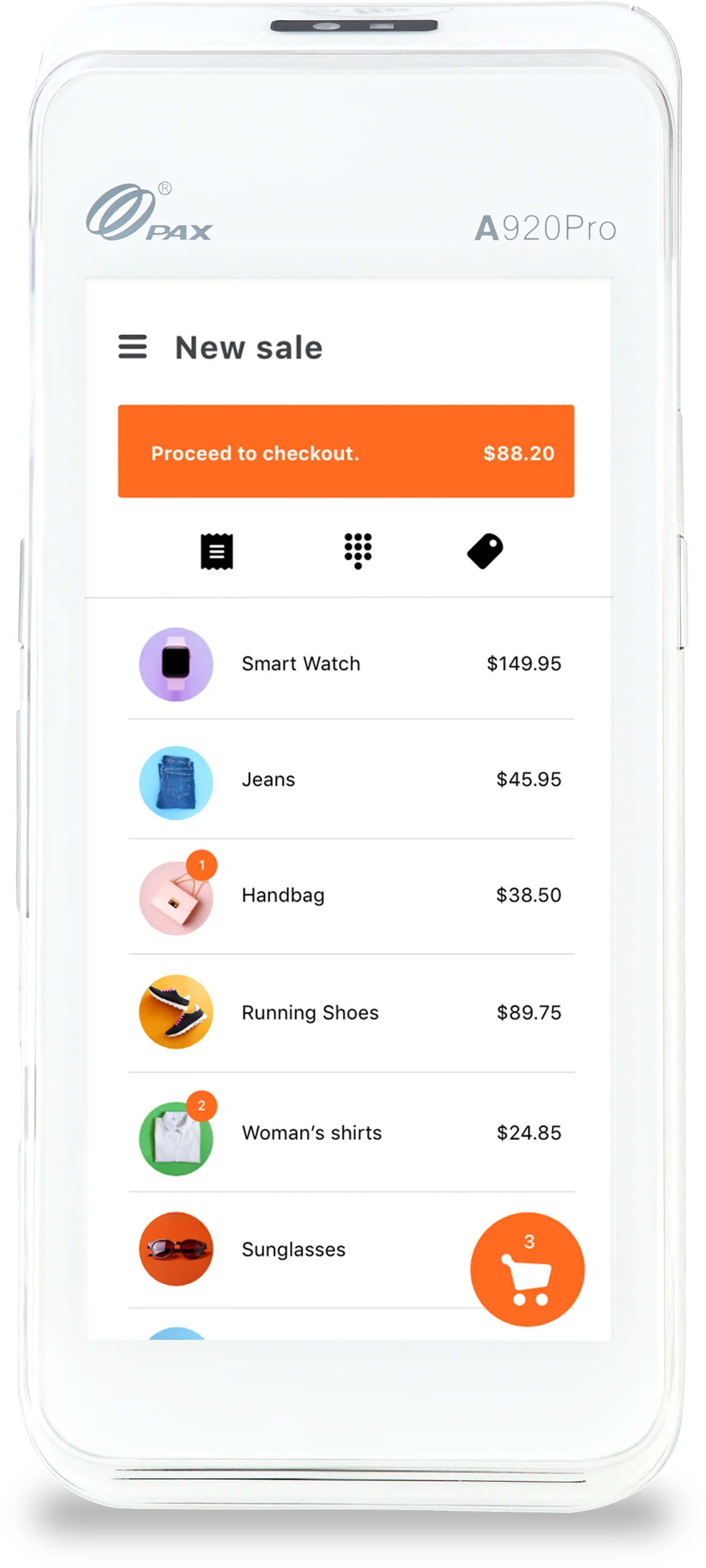
Countertop and handheld. Full touchscreen, built-in printer, chip, swipe and tap.
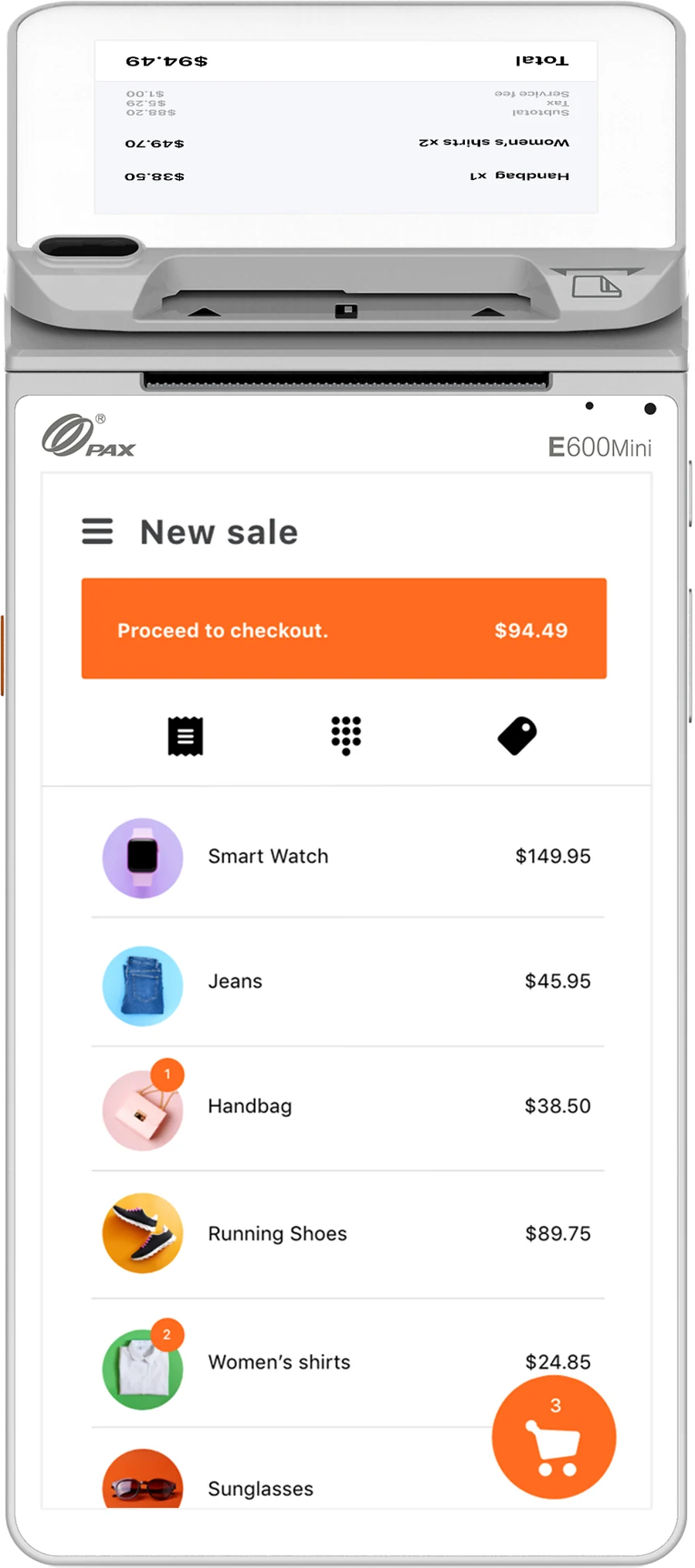
A smaller countertop unit with the same checkout, for a till with no room to spare.
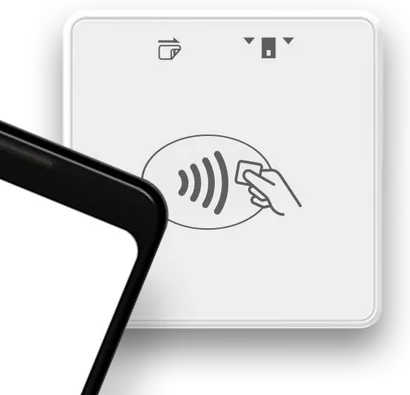
Chip, swipe and contactless, paired to a phone. For the market stall and the callout.
Equipment is issued by the processor on approval, and terms depend on the programme you are placed in. Any lease you already hold with another company is a separate agreement that switching processor does not end — ask us before you sign anything that says otherwise.
No. It is the pricing we submit your application at, and it is never a promise. The processor’s underwriting department sets your final rate from your business profile, processing history and credit. Anyone guaranteeing you a rate before underwriting has looked at you is guessing.
No, and this is the single most important line on the site. Interchange and card-brand assessments sit underneath the markup and are far larger than it. Your effective rate will be a couple of percent, as it is with every provider — the markup is the part that differs.
No. They are published competitor rate cards recomputed against an identical transaction count. Your own rates from any of these providers, including us, depend on underwriting.
Our support front line is an AI voice agent that triages and routes. We do not claim a human answers the phone. Anything touching funding, holds or your account balance belongs to the processor, and we will route you there because they are the only ones who can act on it.
The calculator uses the same figures as this page, because it is the same code. Applying is free and carries no obligation.
Applying carries no obligation. Underwriting, approval and final rates are determined by the processor.
Not sure this is the right account? See every way to apply →